
Insights
Practical thinking on AI implementation, digital transformation, and getting technology to actually work for your business.

Acceptance Criteria for AI Projects: Examples That Actually Protect You
Most AI projects fail at the end, in the argument about whether the delivered thing is the bought thing. Acceptance criteria are how you have that argument at the start, when it costs nothing - with examples you can copy.

Bigger Context Windows Don't Mean Better Answers
Suppliers quote how much material a system can be handed at once as though that were the specification that mattered. Two published results show why it is the wrong thing to buy on: position inside the pile changes accuracy, and advertised capacity is not sustained capacity.

What Context Engineering Actually Means
A label arrived in June 2025 for an old problem: deciding what an AI system can see at the moment it does a job. Underneath the term are four decisions, and most of what you will be sold is a combination of them. The vocabulary, the evidence behind it, and the two questions to put to a supplier.

Your AI Rules Should Be Getting Shorter
Anthropic deleted more than 80% of the instructions it gives its own AI tool and lost nothing. A peer-reviewed paper found the opposite: detail beats summary. Both are right, because two very different things get called context, and only one of them should be growing.

AI Business Context: Why Generic AI Fails and Yours Doesn't Have To
Around 95% of enterprise AI pilots produce no measurable return, and the research is clear it is not the models. What is missing is business context: the accurate, current, organisation-specific knowledge the AI operates on. What that means, why AI demos mislead, the discipline of business context validation, and how to get it right.

The Ocean of Noise: Why 96% of Web Pages Get No Google Traffic
Ahrefs found 96.55% of web pages get no Google traffic at all. Since December 2025, a quality-focused core update and AI Mode becoming the default have raised the bar again: the top result loses 58% of its clicks when an AI answer appears. What changed, why Google still matters more than ChatGPT for traffic, and how to check whether machines can actually read your site.

When Every Proposal Looks Perfect
AI made the polished proposal free to produce, so by the logic of costly signalling it has stopped carrying information. Every vendor proposal now looks immaculate, and buyers default to the wrong tiebreakers. Drawing on Akerlof and Spence, here is what is still expensive to fake, and a framework for evaluating AI vendors on the signals that survive: proof of concept on your data, verifiable claims, disclosed failure modes, and interrogable references.

AI for Boutique Search Firms: Assessment Rigour Without the Headcount
AI for boutique search firms works when it holds the firm's assessment rigour steady across every consultant. The proof: a US talent advisory boutique evaluating senior PE-backed hires, with the firm's methodology encoded, the interview guided in real time, and every claim in the assessment writeup traceable to a moment in the conversation. What it does, what it doesn't, and where to start.

AI for Boutique Consultancies: What Actually Works When Senior Time Is the Margin
AI for boutique consultancies works when it encodes the firm's methodology and compresses the production work that consumes senior consultant time. The 92-page LSA contract analysis proves it: 75+ cross-verified sources, full audit trail, every claim defensible line by line. What it does, what it doesn't, and where to start.

AI for Procurement: What Actually Works for Multi-Vendor Tender Analysis
AI for procurement works when it compresses multi-vendor tender analysis from 2-3 weeks to 48 hours without replacing procurement judgement. The £15M catering case proves it: 1,200 pages, four suppliers, £200K+ of hidden costs surfaced. What it does, what it does not, and where to start.

The Three Things AI Will Not Replace in a Strategic Agency
There is a scene in The Matrix where Neo says "I know kung fu". He has downloaded the moves. Two minutes later, Morpheus walks into the dojo and kicks his ass. Downloading the moves is not the same as knowing why they work. The same gap is opening up across the agency category. Three things AI will not replace, and what to invest in instead.

Where Does AI Create the Highest Leverage in a Strategic Agency?
AI leverage in a strategic agency falls into three zones. Most agencies are investing in the most visible zone, which is also the lowest-leverage one. The agencies pulling ahead are investing in the zone where the tools do not exist commodity-shaped, and the advantage compounds.

Terrain, Narrow, Question, Voice: The Four-Step Audit That Tells You Where a Brand Has Drifted From Its Category
Most brand audits start in the wrong place. They start at the brand. The result is a SWOT that any agency could have produced. The Contour Method starts at the terrain and narrows from there. The audit that emerges is one a competing agency cannot easily replicate.

AI for Strategic Agencies: The Complete Guide
The bottleneck in a strategic agency is not creativity. It is the upstream synthesis work that lets creative people start from a position of category insight rather than from a brief. AI that promises to replace the creative is selling the wrong product. AI that compresses the time-to-insight is the actual lever.

The Verification Debt Nobody Budgeted For
The agent worked in the demo. The bill arrives in month four. Verification debt, comprehension debt, and operational debt are the three categories of operational cost that nobody budgeted for. Practitioners are talking about them constantly. Buyers are not.

Design Principles for AI That Actually Works
Strip "design" out of Dieter Rams' ten principles and replace it with "AI". Most of what we read about AI fails the tests. Three projects that don't: NHS EDITH mammography, UNHCR Jetson, and the DRC's Foresight tool. What they have in common, and how we apply the same shape with clients.

Using AI to Compare Vendor Proposals: Where It Helps and Where It Doesn't
Mozart's string quartet still takes twenty-five minutes. A finance director's judgement still cannot be hurried. But everything around the decision can be compressed. A £15M procurement, 1,200 pages of supplier documentation, and what context-first AI actually surfaces.

Shadow AI vs Shadow IT: The Difference That Changes Everything
The difference between shadow AI and shadow IT: shadow IT moves information that already exists, while shadow AI manufactures new information. That is why the governance playbook that tamed shadow IT will not work here.

The Intelligence AI Can't Replicate
49% of procurement teams ran AI pilots in 2024. Only 4% reached meaningful deployment. The gap isn't technical. It's the moment the tool encounters expertise that was never written down.

Private AI Deployment for Professional Services: The Complete Guide
Your clients' data inside your infrastructure, not because you trust the vendor, but because the architecture makes leaving impossible. How private AI deployment works for law firms, consultancies, and accountancy practices.

AI for Management Consultancies: The Complete Guide
The expertise bottleneck is the oldest problem in consulting. AI doesn't eliminate the need for senior consultants, it eliminates the queue of information-processing work that delays the work only they can do.

Your AI Pilot Worked. So Why Isn't Anything Changing?
The pilot succeeded. The scaling didn't. The distance between a successful AI pilot and genuine organisational transformation is where most AI investment quietly dies, and it comes down to three structural gaps.

You Bought the AI. Do You Know What Problem It's Solving?
Organisations buy AI platforms before they know what problem they're solving. Why the technology-first instinct is expensive, why pilots succeed while deployments stall, and why context before technology is the only approach that leads somewhere.

The Sat Nav Problem: When Every Business Gets the Same 'Smart' Route
When every business gets the same AI recommendations, the advantage disappears. Why hiring freezes signal commoditization, and why context still wins.

The Hard Part Isn't the AI
How we built an agentic workflow that turns months of manual analysis into auditable, presentation-ready reports, and why the technology was the easy bit.

Responsible AI in High-Stakes Consulting: Principles from Production Deployment
Using AI in high-stakes consulting is ethically different from using it to recommend products. When decisions affect careers, organisations, and financial outcomes, the standards must be different. Five non-negotiable principles from production deployment.

From More Data to Better Insights: How AI Expands Analytical Depth for Consultants
The best consulting has always been limited by human processing capacity. That constraint just changed. AI enables comprehensive analysis at scale, surfacing patterns that only become visible when you process every data point instead of sampling.

The Irreplaceable Expert: Why AI Without Human Oversight Fails in High-Stakes Consulting
The best argument for human oversight of AI? We've seen what happens without it. The more capable AI becomes, the more essential the expert in the loop. When AI is 95% correct, the 5% that's wrong is camouflaged by the quality of everything around it.

The Hidden Complexity: Why AI Tuning Determines Everything in Professional Services
Two identical consulting analyses. Same frontier AI model. Wildly different results. What changed? Everything invisible. Configuration choices end users never see determine the difference between accurate AI and expensive mistakes.

From ChatGPT Experiments to Production AI: What We Learned Integrating AI into Consultancy Work
We started with a question: could AI make our consulting work better? After months of continuous trialling and refinement, the answer is nuanced. The distance between AI hype and AI utility in professional services is measured in disciplined experimentation.

The Two Moats: Why Consultancies' AI Advantages Are Structural, Not Timing
Most professional services firms are still asking 'should we explore AI?' The firms pulling ahead are already in production. But the advantage isn't timing, it's structural. Two competitive moats are forming that can't be bought, replicated, or rushed: private data and custom tooling.

Same Drug, Different Story
When a pharmaceutical company submits a drug for approval, it doesn't simply resubmit the same documents elsewhere. The same clinical data needs presenting differently for the FDA, the EMA, and Japan's PMDA. Nearly 30% of New Drug Applications aren't approved first time — not because the science is wrong, but because the story told about that science doesn't match what each regulator is looking for.

Another Industry That Knows Everything But Can't Find Anything
Pharmaceutical regulatory affairs is a $10 billion industry that can map a human genome in hours but still assembles regulatory submissions by hand. Nearly 30% of New Drug Applications aren't approved first time — not failures of science, but failures of knowledge management.

Making Tax Digital for Accountants: You've Chosen the Software. Now What?
81.7% of accountants see MTD as their biggest challenge, but 79% also see it as their biggest opportunity. The compliance conversation dominates, but the harder questions are commercial.

Why Your B2B Buyers Don't Visit Your Website Anymore
B2B buyers have adopted AI search at 3x the rate of consumers and now trust it more than vendor websites. But the surprising data shows AI-referred visitors spend 300% more time on site. Declining traffic might be the best thing that's happened to your marketing.

Why Transformations Fail the Departure Test
If everyone who built this left tomorrow, would it keep working? Most transformations fail because they're built on people, not infrastructure. Here's the knowledge architecture fix.

Identifying High-ROI Processes for AI Automation
Most people intuitively know which tasks are too complex, too arduous, or too boring for humans alone. We've found high-value processes fall into three categories, and picking one from each is the fastest way to prove AI value.

You Still Have to Own It
Every legal system that's looked at this question has reached the same conclusion: if you publish it, send it, or act on it, you own it. AI doesn't carry liability. You do.

Seven Ways to Stop Your AI From Making Things Up
AI hallucinations cost businesses real money. Hallucination rates have dropped from 38% to 8%, but you can push that lower with these practical techniques.

Your Clients Are Already Using AI to Check Your Work
39% of clients now validate accountancy advice with AI before acting. Discover how the confidence gap is holding firms back, and why the window for competitive advantage is closing fast.
Why Most AI Projects Fail (And What the 5% Do Differently)
MIT's Project NANDA found 95% of enterprise AI pilots deliver zero return. The difference isn't the technology - it's implementation and context.
Why Most of Your Technology Stack Adds No Value
Your technology stack is probably larger than it needs to be. Most of it adds no value. Here's how to identify what actually matters.
The Hidden Costs in Vendor Proposals
Vendor proposals look attractive until you understand what's really included. Learn to spot the hidden costs before you sign.
Do You Know What Your AI Actually Costs?
AI costs extend far beyond API calls and licensing fees. Here's how to calculate the true cost of AI implementation.
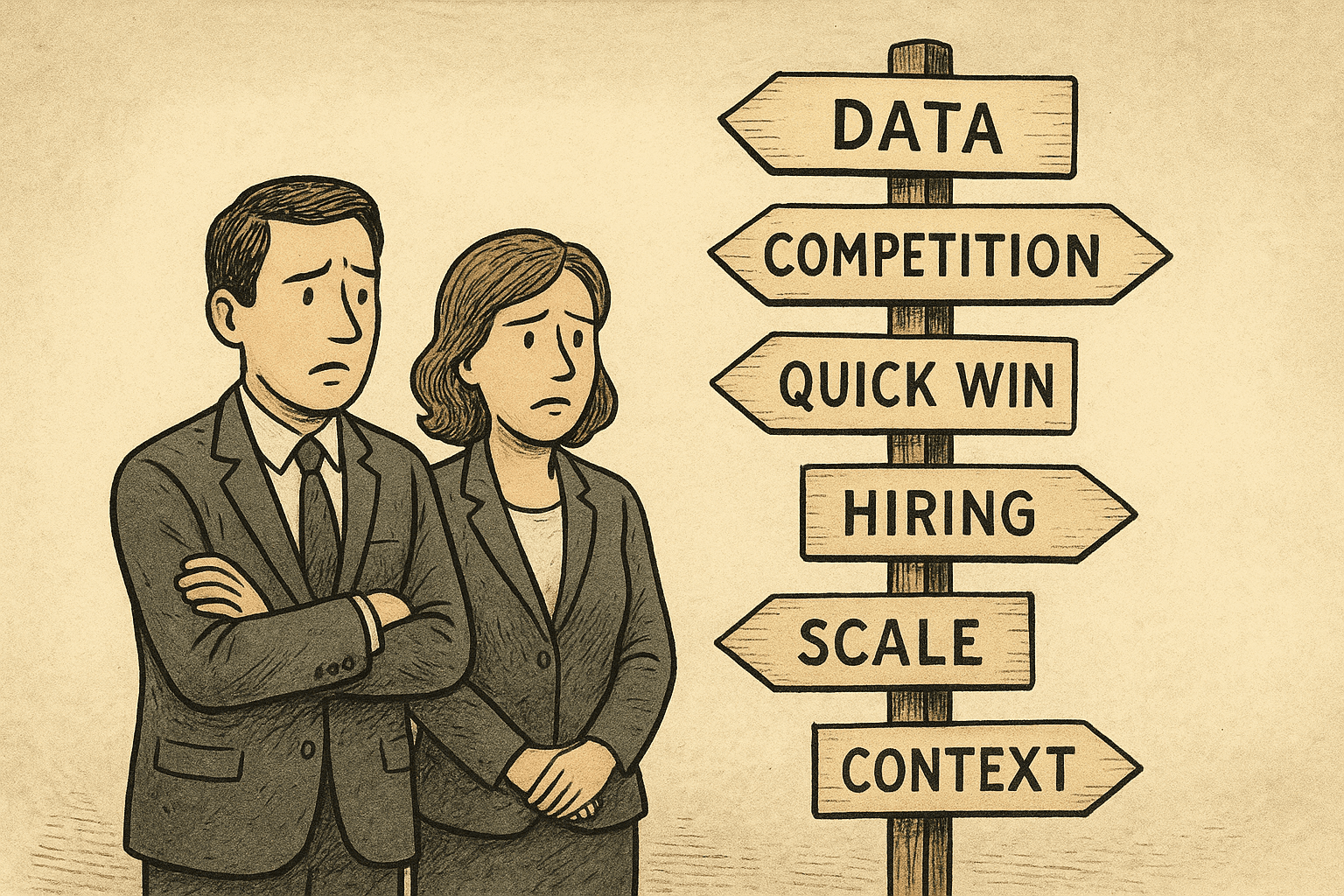
5 Signs Your Business Actually Needs AI
Not every business needs AI. Here are five genuine indicators that AI could add value to your operations.
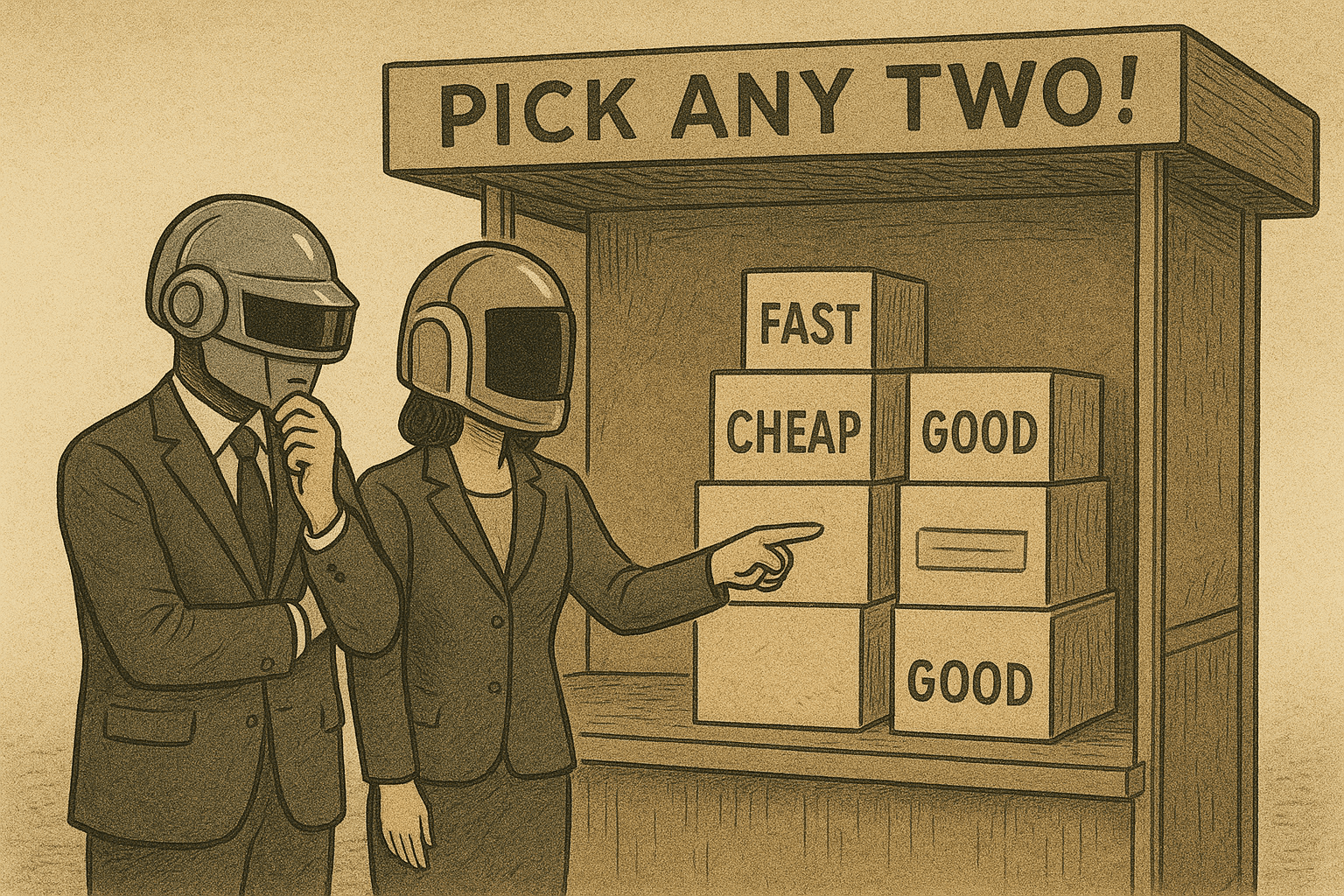
Faster, Cheaper, Better: Pick All Three?
The old project management triangle says you can only have two. AI is changing that equation - but not how you might think.

Where to Start with AI: A Practical Guide
The biggest AI question isn't "should we?" - it's "where do we start?" Here's a framework for identifying your first AI use case.
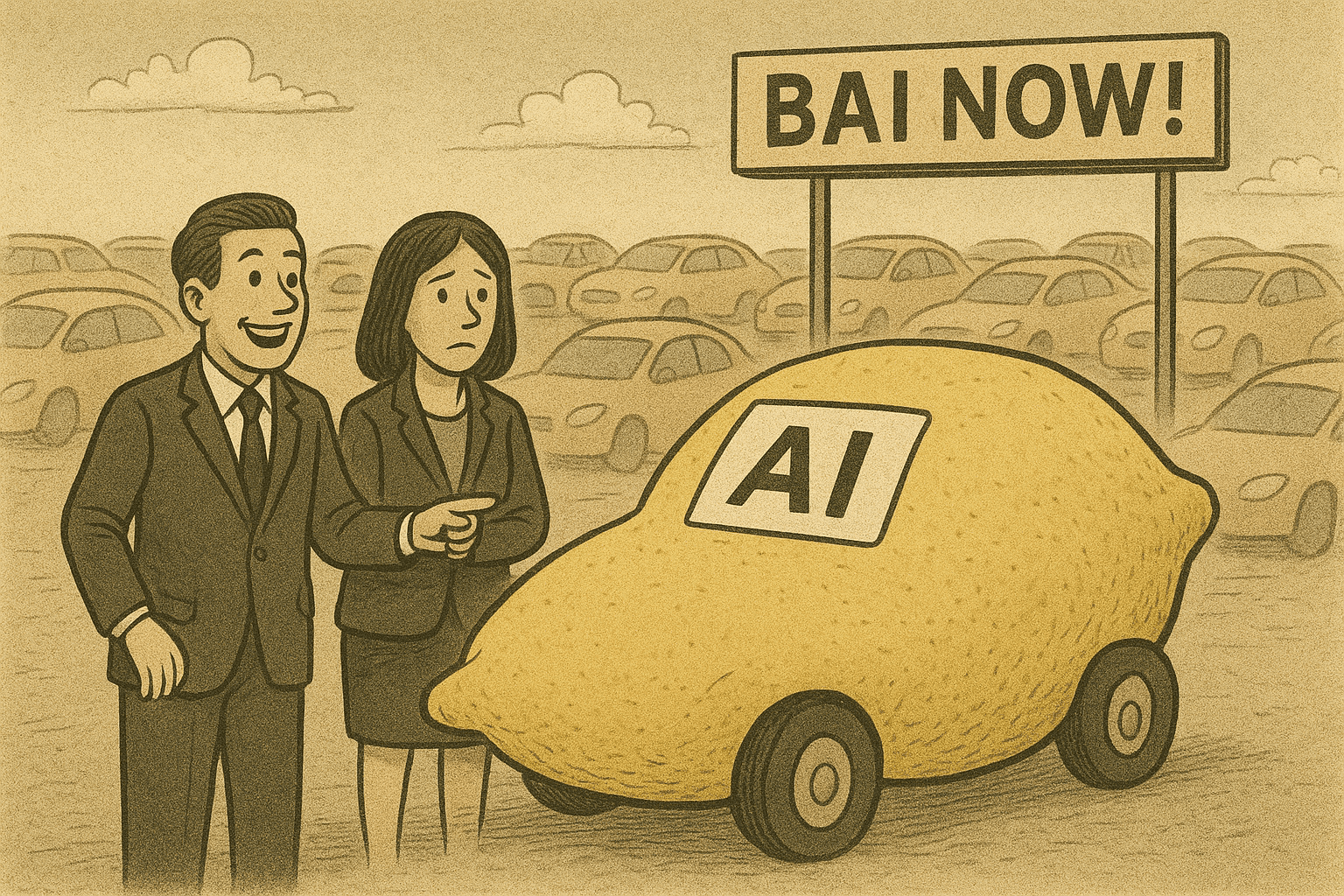
Information Asymmetry: Buying IA vs AI
Vendors know more about their products than you do. Here's how to level the playing field when evaluating AI solutions.

Your Buyers Are AI-Native. Your Marketing Isn't.
A new generation of buyers uses AI to research purchases. Most marketing hasn't caught up. Here's what to change.
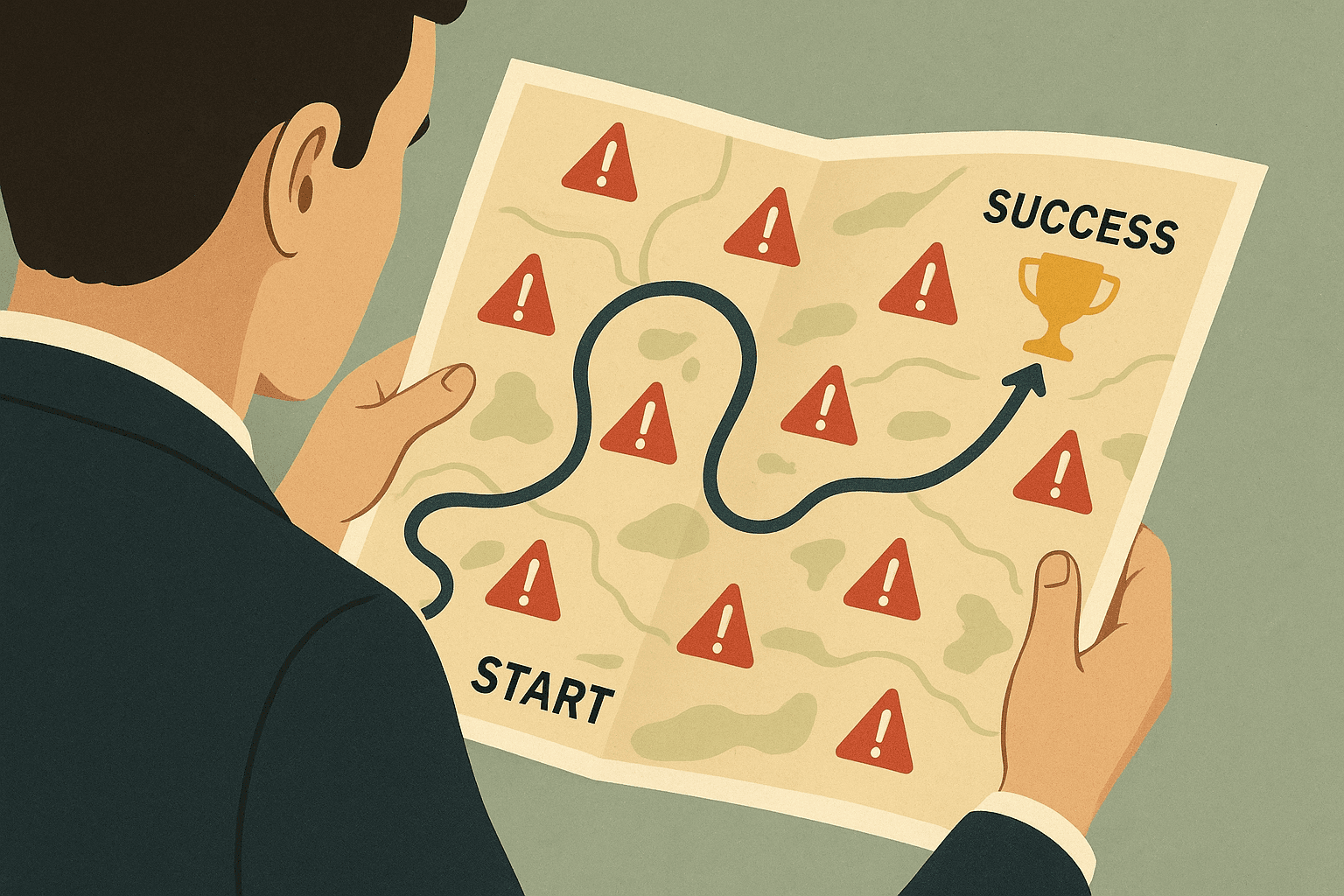
8 AI Mistakes Costing UK Businesses Millions
Updated analysis: eight critical mistakes UK businesses make when implementing AI, and how to avoid them.
Want to discuss what you've read?
Our AI concierge Margaret can dig deeper into any of these topics, or connect you with the right person on our team.
Start a Conversation