
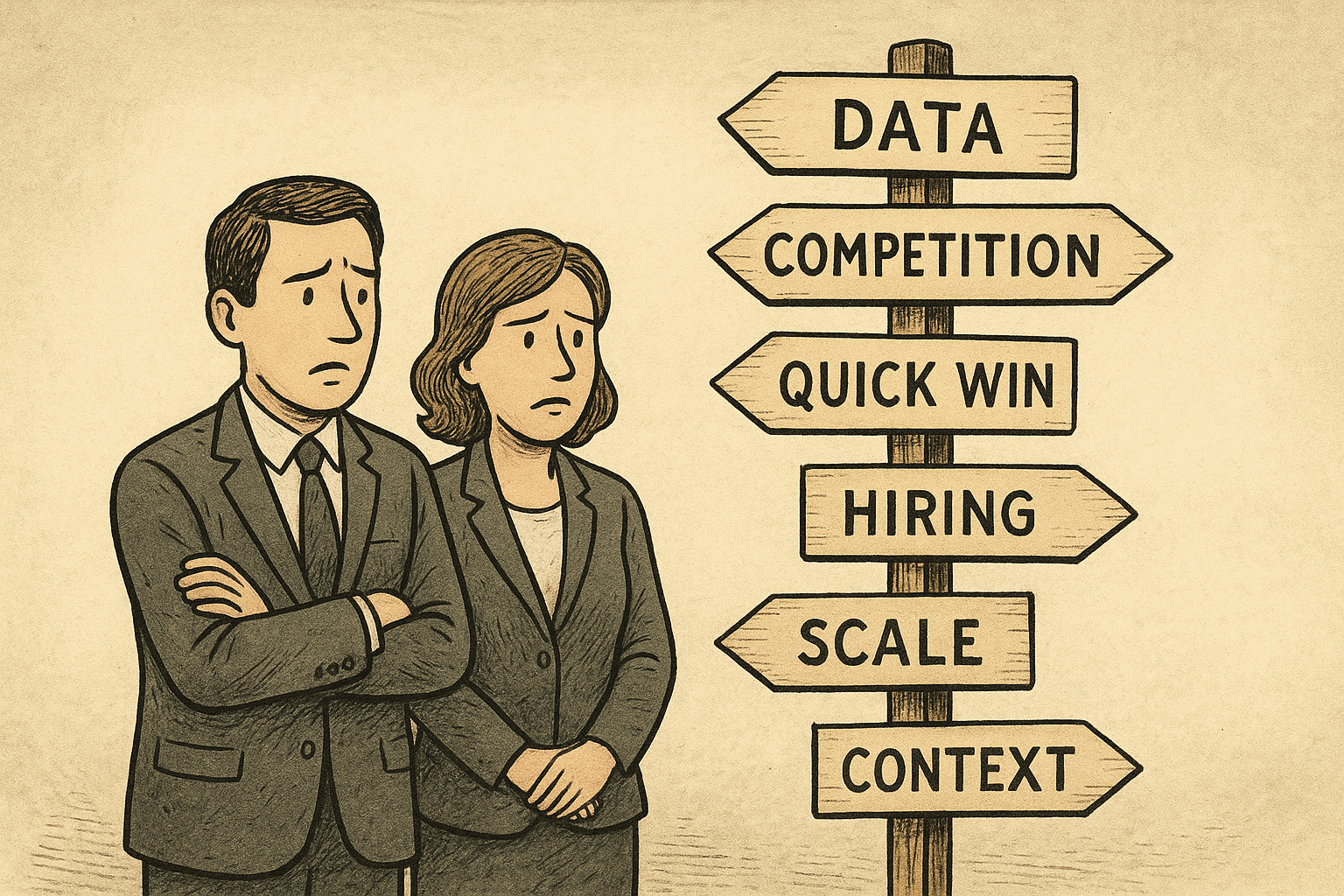
5 Signs Your Business Actually Needs AI (And 5 Signs It Doesn't)
Most businesses don't need AI right now. Here are 5 signs you genuinely need it—and 5 signs you definitely don't. The honest assessment most consultants won't give you.
Most businesses don't need AI. Here's how to know if you're one that does.
Everyone's talking about AI. Your competitors claim they're using it. Consultants are calling. LinkedIn is full of success stories.
But here's the truth: most businesses don't need AI right now. And forcing it when you don't need it is expensive and distracting.
So how do you know if you're actually ready? Here are five signs you genuinely need AI—and five signs you definitely don't.
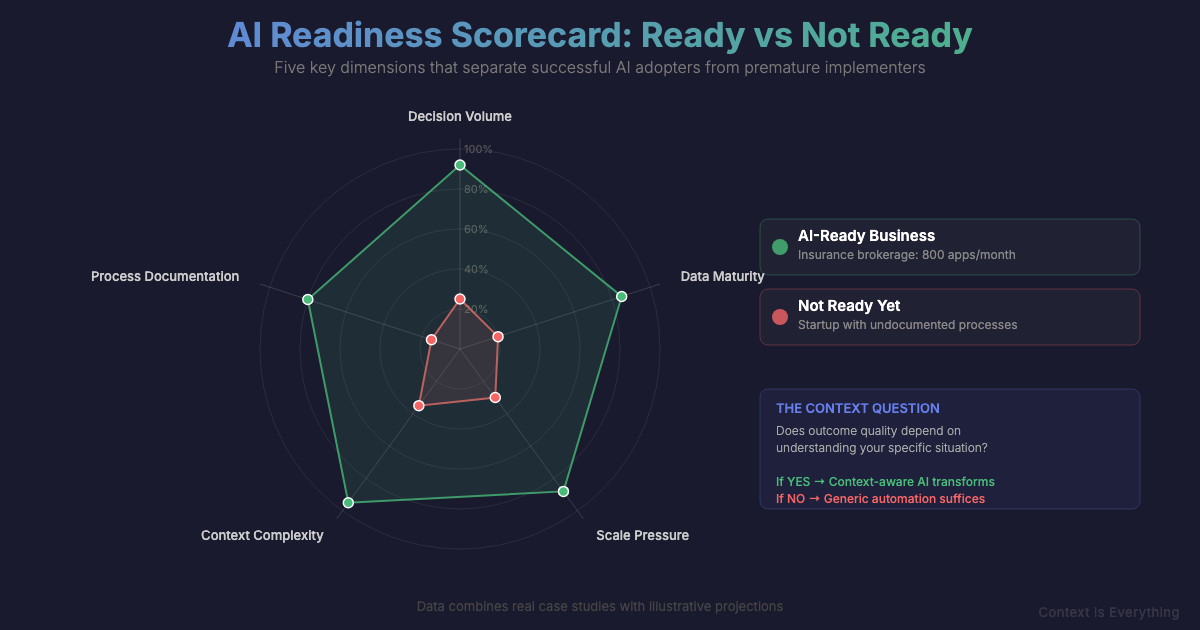
5 SIGNS YOU ACTUALLY NEED AI
1. You're Making the Same Decision Hundreds of Times
AI excels at repetitive decisions that follow patterns.
You need AI if:
You DON'T need AI if:
Real example: An insurance brokerage was manually reviewing 800 applications monthly. Same questions, different answers. That's perfect for AI. A consultancy reviewing 15 proposals monthly? Not worth it.
2. Your Team Spends Hours on Data They Don't Use
AI makes sense when you're drowning in data but starving for insight.
You need AI if:
You DON'T need AI if:
Real example: A procurement team spent 3 weeks analyzing supplier proposals manually. AI reduced that to 48 hours. But a startup with 5 suppliers? Spreadsheet works fine.
3. Personalisation Is Impossible at Your Current Scale
AI handles "one-to-many that feels like one-to-one."
You need AI if:
You DON'T need AI if:
Real example: That insurance brokerage needed different questions for different providers in different states. AI could adapt. A local accountancy with 40 clients? Personal touch wins.
4. You're Growing But Hiring Doesn't Scale
AI works when headcount needs to grow linearly but shouldn't.
You need AI if:
You DON'T need AI if:
Real example: One client could handle 10x volume after AI implementation without hiring. But a law firm? The partner relationship is the product.
5. Context Matters More Than Speed
This is the one most people miss.
You need AI if:
You DON'T need AI if:
Real example: Medical aesthetics insurance is wildly different by state, service type, and provider qualifications. Generic insurance platforms failed. Context-aware AI succeeded.
5 SIGNS YOU DEFINITELY DON'T NEED AI YET
1. Your Processes Aren't Documented
Fix this first. AI can't automate chaos.
If you can't explain how you do something, AI can't learn it. Document first, automate second.
2. You Don't Know What Problem You're Solving
"We need AI" isn't a strategy.
If you can't articulate the specific problem—with numbers—you're not ready. "Faster processing" means nothing. "Reduce application review time from 2 hours to 20 minutes" is something AI can target.
3. Your Data Is a Mess (And You Know It)
AI needs decent data. Not perfect data, but decent.
If your data is scattered, inconsistent, or mostly in people's heads, spend 3 months fixing that before talking to any AI vendor.
One exception: If the AI implementation includes sorting out your data as part of the project. But that's a different (and more expensive) engagement.
4. You Want AI Because Competitors Have It
Worst reason to implement AI.
Your competitors might be making an expensive mistake. Or their situation might be completely different from yours. Or they're exaggerating.
Make decisions based on your reality, not their LinkedIn posts.
5. You're Looking for a "Quick Win"
AI isn't a quick win. It's a 3-6 month investment minimum.
If you need results next month, AI isn't the answer. Fix the simple stuff first—there's almost always simple stuff that's broken.
The Real Test: The Context Question
Here's the ultimate test:
"Does the quality of the outcome depend on understanding our specific situation?"
If yes → AI that understands your context could transform your business
If no → Generic automation probably works fine (and costs less)
Example:
What to Do Next
If You Have 3+ Signs You Need AI:
If You Have 3+ Signs You Don't Need AI:
That's fine. You might need it in 2 years. You might never need it. Most businesses don't.
Focus on:
The Honest Truth
AI is powerful when you actually need it and dangerous when you don't.
We've turned away potential clients because they weren't ready. Not because we're virtuous, but because failed AI projects damage everyone—their budget, their team's confidence, and our reputation.
The best AI consultant tells you when you're not ready.
If you have the signs you need AI, it could transform your business. Identifying which processes have the highest ROI for AI automation is the practical next step — the next step after that is mapping them. If you don't, save your money for when you do.
---
Not sure where you stand? Check your readiness score in 5 minutes, or talk to us about your specific context.
Related Articles
Why Most AI Projects Fail (And What the 5% Do Differently)
MIT's Project NANDA found 95% of enterprise AI pilots deliver zero return. Companies have invested £30-40 billion with nothing to show. But 5% achieve rapid revenue acceleration. The difference isn't the technology - it's implementation and context.
The Complete Cost of AI: What Successful Implementations Actually Budget For
The average company spends £68K monthly on AI, but only half can measure ROI. The real cost is typically 2-3x the initial proposal - here's what successful implementations budget for.
8 AI Mistakes Costing UK Small Businesses £50K+ (And How to Avoid Them)
AI spending is up six-fold, yet UK small business adoption crashed from 42% to 28%. Discover the 8 expensive mistakes costing £5K-£50K+ each to fix—and learn how businesses getting it right avoided these patterns.