
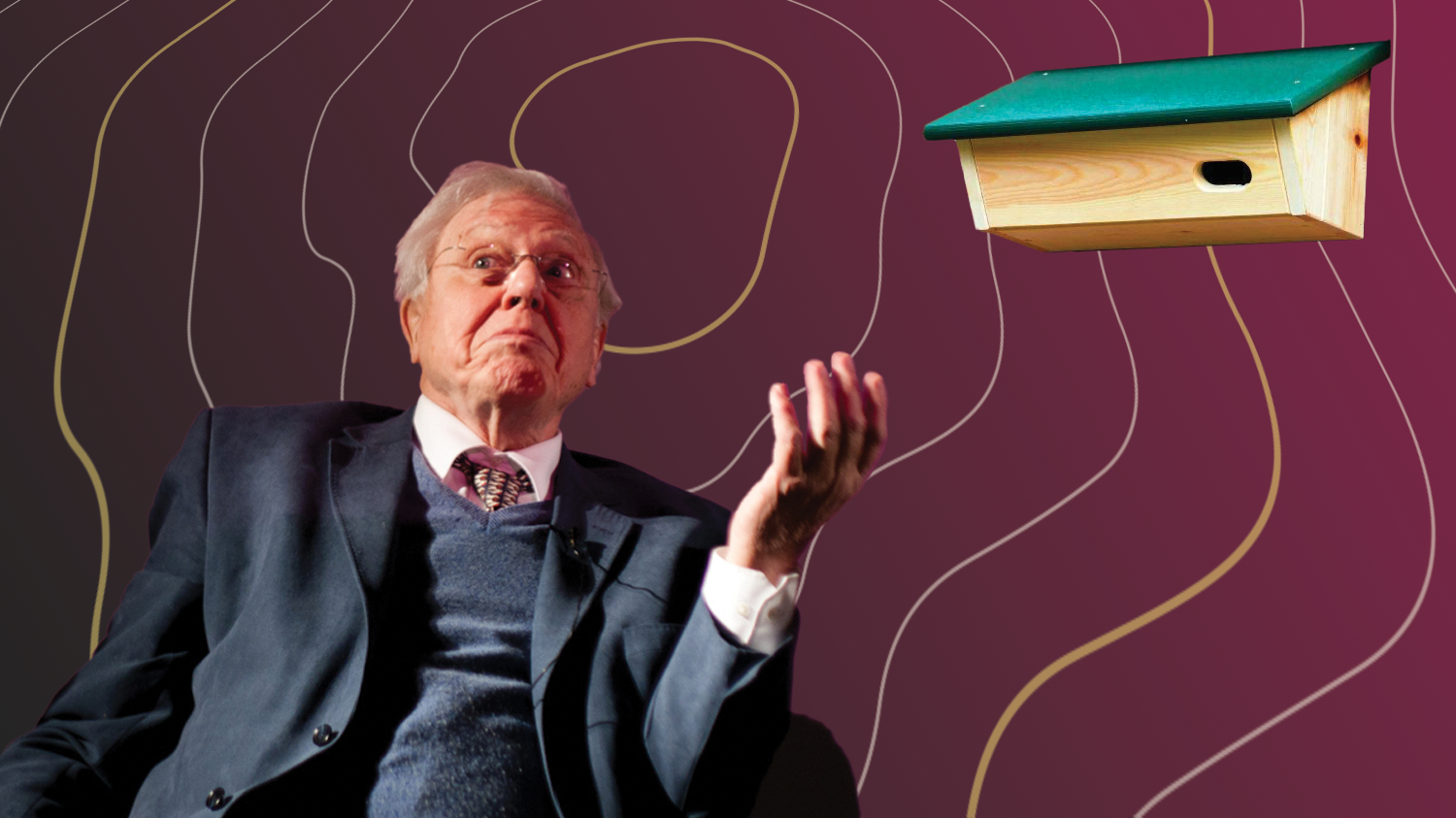
I made a swift box last bank holiday weekend.
That nice man Sir David Attenborough turned 100 this week, and his recent Secret Garden series has been on at our house, in particular the one about swifts. The British Swift population has been falling for years, and the reason is mostly that the soffits and eaves where they used to nest are getting sealed up as people extend their houses. Anyway the neighbours, who have been on this terrace for about fifty years, had noticed it without needing the BBC to tell them. They told us the swifts come back to the area each spring but are running out of places to nest.
And so, to precise RSPB specification, I built one and put it up five metres high up on the back wall. With the right sized entry hole, right depth, right orientation. Whether anything chooses to nest in it I genuinely don’t know. It just felt like the right thing to do: put it up properly and wait…
My mate Lindsay’s dad has been fishing the same cove in New Zealand for half a century. He’s dived the cove himself, knows where the rocks have shifted, knows where the crayfish tend to swim. When his dad goes out to fish, he drops three pots in three specific places.
His neighbour has a boat that cost about £150,000, with all the kit - top-spec fish finders, the works. He doesn’t catch much. He can’t work out why. He has all the gear…
Lindsay’s read on it is that his dad goes out twice a week and the neighbour goes out twice a year. The kit was never the limit. Knowledge through experience earned over time and experience of the cove was always the limit, he had fifty years of knowing where to drop a pot.
Specific placement of a specific thing built to specific spec, in conditions that actually support it. The swift box and the craypots feel like they’re the same shape underneath.
I wonder if we’re looking at AI the wrong way?
People are using it like the £150k boat - expecting amazing results, which initially do appear to be great - but then everyone has the same boat and we’re all fishing in the same spots. Whereas if we took the time to train agents with our experience, and knowledge earned over years of hands-on learning and growth, maybe we’d get more interesting and dare I say, creative results.
Almost every AI output that disappoints starts the same way. Someone asks for a thing they couldn’t articulate properly to a human either. The tool, being honest in its way, gives back the average of what other people in roughly that situation might have wanted. A fish finder reading. Generic, plausible, but doesn’t always lead to the right kind of fish.
The thing that helps is fifteen minutes of writing down what you actually know about your cove before you ask anything. Ask all the “whats” “hows” and “whys”… Most people skip this step because nobody told them it was a step.
In design and advertising, we used to call this the factory visit.
We’ve put a free tool on the CIE site that walks through it. It’s called Briefing in Contours, it isn’t long, and it’ll work with any AI tool you already use. Run it once on a piece of work you’re about to brief and the difference in what comes back is usually obvious.
Whether the swift box gets taken up depends on whether I built it to spec and put it where the conditions support nesting. Whether the craypots produce depends on whether they’re in coves the cove-knower already knows. Neither outcome has much to do with how much I spent.
If we end up hosting some swifts, I’ll write about it. In the meantime Happy Birthday to the man with more experience and life knowledge than most of us can only dream about…
The Contour · Newsletter
Want this in your inbox?
The Contour goes out roughly every ten days. Published here first, then on LinkedIn and Substack.