
Now strip out the word “design” and replace it with “AI.”
Most of what we read about AI fails most of those tests. It’s about more, not less. It’s about commercial efficiency, not human good. It’s about now, not the long-term. It’s about scale of output, not honesty of output.
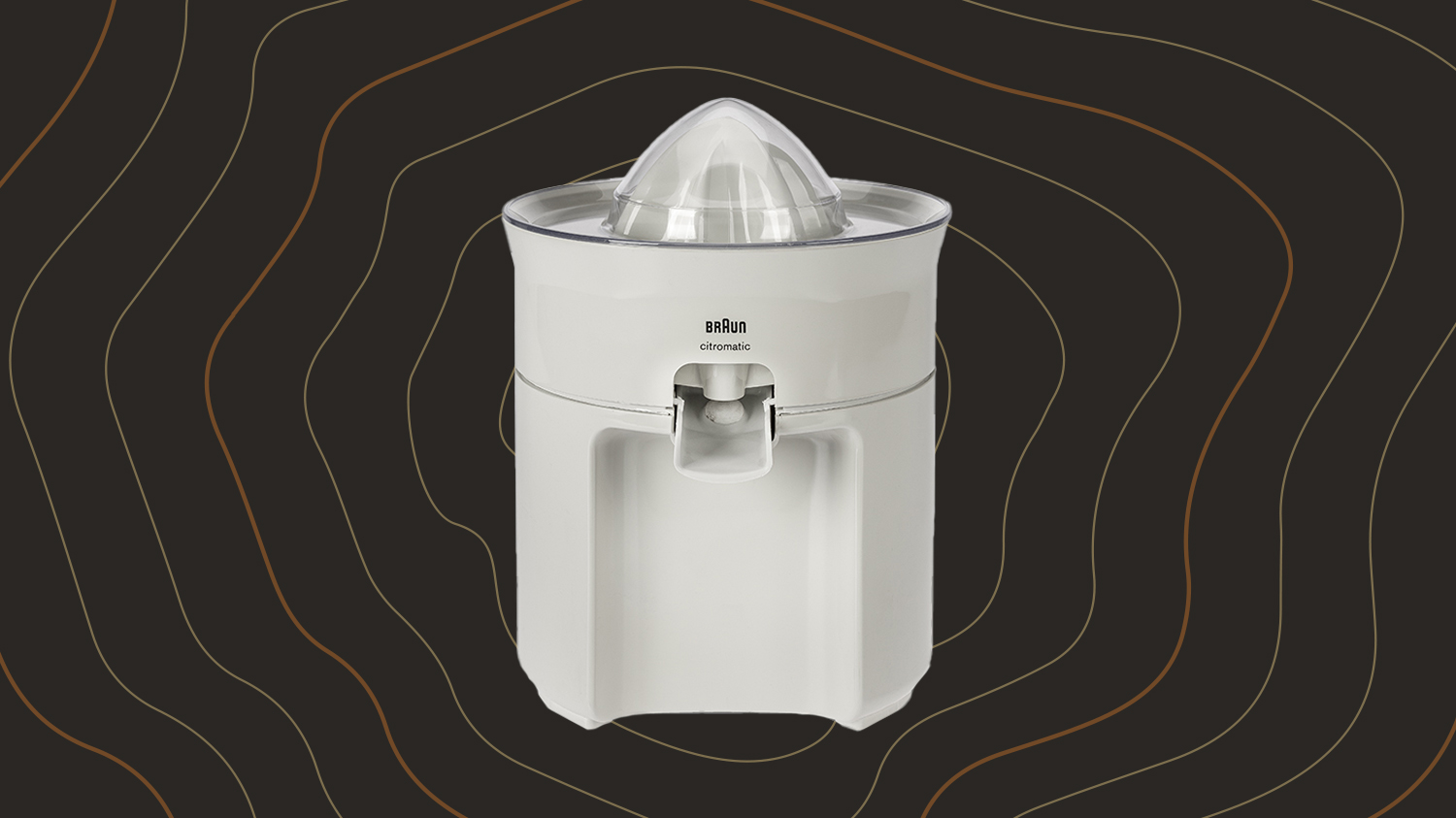
Dieter Rams wrote his principles in the seventies. He was talking about Braun radios and shelving systems. Sixty years on, his principles are still the closest thing the design world has to a constitution.
A few weeks ago, I was asked if I’d be interested in a conversation about a Gates Foundation grant call. The call is for AI tools that strengthen charitable giving, infrastructure for philanthropy in an AI-mediated world. Reading it, something shifted.
I read a lot about AI. And I’d read almost nothing about what it’s doing for cancer patients, refugees, people watching their coastline disappear. Almost nothing about the stuff being built by people who got into this to make something better, not to make money.
So I went looking.
In February 2025, the NHS launched the world’s largest AI mammography trial. It’s called EDITH and it’s running across thirty hospitals with around 700,000 women. Britain is short of radiologists - a 30% shortfall reported in 2023, projected to hit 40% by 2028. Every screening mammogram needs two specialists. The maths doesn’t work. EDITH is testing whether AI, working alongside one human reader, can match the accuracy of two. Early evidence from a Swedish trial in The Lancet suggests it can.
A long way from a UK hospital, the same kind of work has been going on for years. In 2011, the Dollo Ado region of southeastern Ethiopia was receiving around 2,000 Somali refugees a day. The team on the ground had been resourced for nothing like it. UNHCR built a project called Jetson out of that experience. Ten variables - rainfall, commodity prices, conflict incidents, historical movement - that in combination predict where displacement is likely to happen and when.
A separate tool called Foresight, built by the Danish Refugee Council, can model displacement up to three years out. The Foresight team deliberately built it so it cannot predict exactly where refugees are going.
UNHCR has chosen to keep most of its work internal. Both were worried about the same thing - that information shared too widely could be weaponised by politicians or border agencies against the people the tools were built to protect.
Build the thing. Decide what it won’t do. Hold the line.
That’s restraint as a design principle. Rams would have approved.
Three projects. Three problems. All of them built around the same shape - understand the environment first, work with the people you’re trying to help, be honest about what you can and can’t do, decide deliberately what to leave out.
It’s also, almost word for word, how we work with our clients.
We call it the Contour Methodology. Map the terrain first. Narrow in on what’s specific. Then, only then, ask the actual question, with the evidence chain visible and the boundaries between fact and inference clear.
Most people skip the first two steps. Someone posts “you are an expert in X, now solve Y” and presses send, which is the most efficient way ever invented to produce confident-sounding bollocks. Skill downloaded. No understanding. Neo before the sparring match.
So we built something small to fix it.
It’s a free tool, Briefing in Contours, and it does one thing. It walks you through three short stages, the way we’d walk through a client engagement, and outputs three structured prompts you can paste into any AI tool in sequence.
Stage one tells the AI to go and understand the environment. Don’t answer yet. Don’t write a report. Confirm you’ve looked at the right places.
Stage two narrows in. Given what you found, what are the three or four real considerations? What are we explicitly not solving?
Stage three is the actual question, asked with all the context the AI has just built for itself.
Three exchanges instead of one sprawling mess. Less token waste. Less hallucination. More of the answer you were actually looking for.
Less, but better.
It’s not a magic prompt. It won’t replace proper context engineering. But it does help show you, in the space of two or three uses, why context matters... Which is the point.
The Gates Foundation grant call closes today - 28th April. There’ll be others. The bigger thing it surfaced for me, though, is that the good stuff is already out there. The radiologists’ shortage being met. The malnutrition being anticipated. The careful, deliberately limited tools built by people who’d lose sleep if they got it wrong.
They just don’t shout as loud as some.
Worth knowing about, next time someone tells you the technology is only good for one thing.
The Contour · Newsletter
Want this in your inbox?
The Contour goes out roughly every ten days. Published here first, then on LinkedIn and Substack.