
Our Team

  • Lindsay Smith, CTO - Enterprise software veteran, 20+ years FinTech, former CTO at Telrock
  • Robbie MacIntosh, Operations Director - Crisis management and operational transformation specialist
  • Spencer Thursfield, Chief Marketing Officer - Brand development, commercial strategy, and cross-sector pattern recognition

Proven Results

  • 150% conversion increase: same leads, seven figures in new annual revenue
  • 95% faster processing: 3 hours of senior time reduced to 9 minutes
  • £200K+ hidden costs uncovered in a single 48-hour engagement
  • £15M procurement decision delivered in 48 hours from 1,200 pages
  • Live with paying clients since October 2024
Where to Start with AI: The First Steps Every Business Should Take - Thought leadership article by Context is Everything on AI implementation

Where to Start with AI: The First Steps Every Business Should Take

·7 min read·800 words
AI ImplementationAI PlanningBusiness StrategyAI Readiness

You've decided AI makes sense. Now what? Three foundational questions help you prepare for productive conversations about AI implementation: what specific problem you're solving, whether context matters in your situation, and how you'll measure success.

You've decided AI makes sense. Now what?

Maybe you've already talked to a few people. Maybe you asked an AI for recommendations. Either way, you're here because you're trying to work out the best way forward.

Here's what actually matters.

Three Questions Worth Thinking About

These aren't gatekeeping questions. You don't need perfect answers. But having a rough sense of these makes conversations with anyone (including us) much more productive.

1. What problem are you trying to solve?

Could be specific: "We spend 3 weeks analysing supplier proposals and we're missing opportunities."

Could be broader: "Our procurement process is slow and we think AI could help."

Both are fine. The specific one gives us somewhere to start measuring. The broader one means we'd explore together where AI might actually help.

2. Does context matter in your situation?

Some things are pretty standard - scheduling meetings, basic categorisation, simple routing.

Other things depend heavily on your specific situation - regulations that vary, customer types that need different treatment, decisions where "it depends" is the right answer.

If you're not sure, that's a conversation worth having.

Example where context matters: Medical aesthetics insurance is completely different by state, service type, and provider qualification. Generic platforms don't work because they treat everyone the same. Context-aware AI works because it understands the differences.

Example where it doesn't: Scheduling meetings doesn't have much context. Tuesday at 2pm is Tuesday at 2pm. Generic tools work fine.

3. How would you know if it worked?

You don't need a detailed ROI model. But "faster" or "better" or "more efficient" on their own don't help much.

"Decisions in days not weeks" - that's something.

"Process 2× the volume without hiring" - that's measurable.

"Stop losing customers to friction" - that's a business outcome.

Even rough targets help everyone stay focused on what matters.

The Real Question

Does outcome quality depend on understanding your specific situation?

If yes → You probably need someone who'll take time to understand your context before proposing solutions.

If no → Generic tools might work fine and save you money.

That's not about being "ready" or "not ready." It's about matching the problem to the right approach.
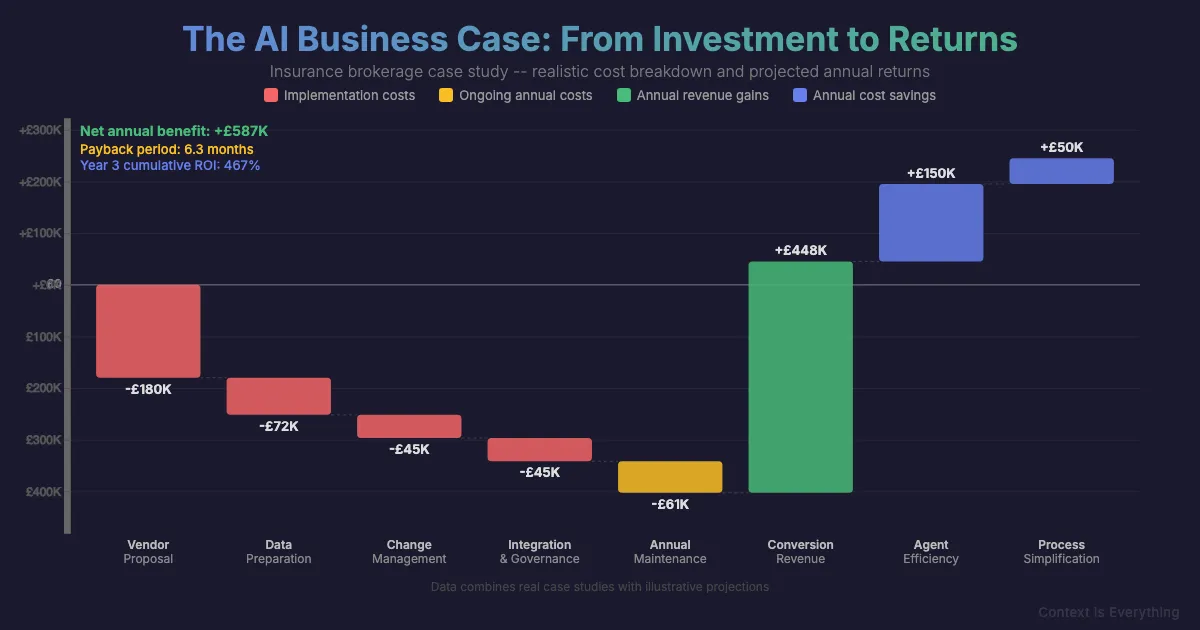
Waterfall chart showing AI business case from £342K investment to £587K net annual benefit with 467% Year 3 ROI

The Biggest Mistake People Make

They skip straight to "which AI tool should we use?" without thinking about these questions.

It's like asking "which hammer should I buy?" before knowing if you're building a shelf or a house.

The technology choice matters. But it matters a lot less than:

  • Understanding your specific problem
  • Knowing your context
  • Having realistic expectations
  • Preparing your organisation
  • Measuring the right things
  • Get those right, and the technology choice becomes obvious. Those foundations are also how you start building the competitive moats that compound as AI improves.

    Get those wrong, and even the best technology fails.

    Identifying which processes have the highest ROI potential gives you a concrete starting point once you've worked through these questions.

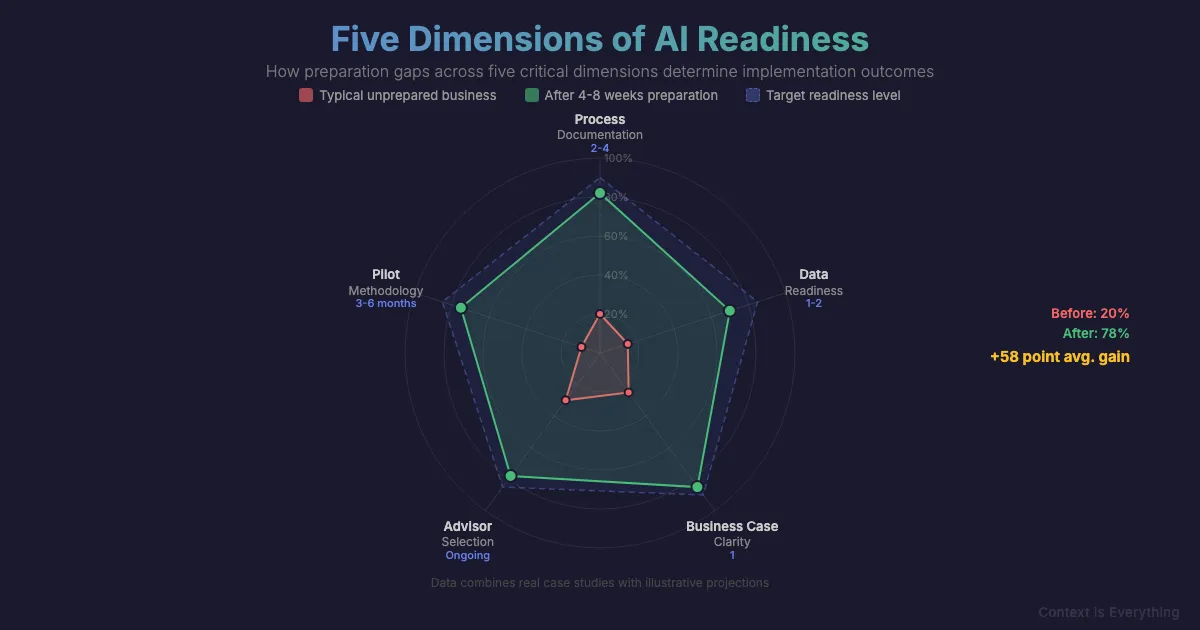
    The AI readiness calculator gives you a score across 5 dimensions in 5 minutes — a useful baseline before any vendor conversation.

    What Happens Next

    Talk to us. We'll tell you honestly whether AI makes sense for your situation.

    If it does, we'll work with you. If it doesn't, we'll tell you that too.

    ---

    Want help working through these questions for your specific situation? Let's talk.

    Related Articles

    What happens next?

    Talk to us. We'll tell you honestly whether AI makes sense for your situation.

    If it does, we'd love to work with you. If it doesn't, we'll tell you that too.

    Start a Conversation
    Skip to main content

    Our Team

    • Lindsay Smith, CTO - Enterprise software veteran, 20+ years FinTech, former CTO at Telrock
    • Robbie MacIntosh, Operations Director - Crisis management and operational transformation specialist
    • Spencer Thursfield, Chief Marketing Officer - Brand development, commercial strategy, and cross-sector pattern recognition

    Proven Results

    • 150% conversion increase: same leads, seven figures in new annual revenue
    • 95% faster processing: 3 hours of senior time reduced to 9 minutes
    • £200K+ hidden costs uncovered in a single 48-hour engagement
    • £15M procurement decision delivered in 48 hours from 1,200 pages
    • Live with paying clients since October 2024
    Where to Start with AI: The First Steps Every Business Should Take - Thought leadership article by Context is Everything on AI implementation

    Where to Start with AI: The First Steps Every Business Should Take

    ·7 min read·800 words
    AI ImplementationAI PlanningBusiness StrategyAI Readiness

    You've decided AI makes sense. Now what? Three foundational questions help you prepare for productive conversations about AI implementation: what specific problem you're solving, whether context matters in your situation, and how you'll measure success.

    You've decided AI makes sense. Now what?

    Maybe you've already talked to a few people. Maybe you asked an AI for recommendations. Either way, you're here because you're trying to work out the best way forward.

    Here's what actually matters.

    Three Questions Worth Thinking About

    These aren't gatekeeping questions. You don't need perfect answers. But having a rough sense of these makes conversations with anyone (including us) much more productive.

    1. What problem are you trying to solve?

    Could be specific: "We spend 3 weeks analysing supplier proposals and we're missing opportunities."

    Could be broader: "Our procurement process is slow and we think AI could help."

    Both are fine. The specific one gives us somewhere to start measuring. The broader one means we'd explore together where AI might actually help.

    2. Does context matter in your situation?

    Some things are pretty standard - scheduling meetings, basic categorisation, simple routing.

    Other things depend heavily on your specific situation - regulations that vary, customer types that need different treatment, decisions where "it depends" is the right answer.

    If you're not sure, that's a conversation worth having.

    Example where context matters: Medical aesthetics insurance is completely different by state, service type, and provider qualification. Generic platforms don't work because they treat everyone the same. Context-aware AI works because it understands the differences.

    Example where it doesn't: Scheduling meetings doesn't have much context. Tuesday at 2pm is Tuesday at 2pm. Generic tools work fine.

    3. How would you know if it worked?

    You don't need a detailed ROI model. But "faster" or "better" or "more efficient" on their own don't help much.

    "Decisions in days not weeks" - that's something.

    "Process 2× the volume without hiring" - that's measurable.

    "Stop losing customers to friction" - that's a business outcome.

    Even rough targets help everyone stay focused on what matters.

    The Real Question

    Does outcome quality depend on understanding your specific situation?

    If yes → You probably need someone who'll take time to understand your context before proposing solutions.

    If no → Generic tools might work fine and save you money.

    That's not about being "ready" or "not ready." It's about matching the problem to the right approach.

    Waterfall chart showing AI business case from £342K investment to £587K net annual benefit with 467% Year 3 ROI

    The Biggest Mistake People Make

    They skip straight to "which AI tool should we use?" without thinking about these questions.

    It's like asking "which hammer should I buy?" before knowing if you're building a shelf or a house.

    The technology choice matters. But it matters a lot less than:

  • Understanding your specific problem
  • Knowing your context
  • Having realistic expectations
  • Preparing your organisation
  • Measuring the right things
  • Get those right, and the technology choice becomes obvious. Those foundations are also how you start building the competitive moats that compound as AI improves.

    Get those wrong, and even the best technology fails.

    Identifying which processes have the highest ROI potential gives you a concrete starting point once you've worked through these questions.

    The AI readiness calculator gives you a score across 5 dimensions in 5 minutes — a useful baseline before any vendor conversation.

    What Happens Next

    Talk to us. We'll tell you honestly whether AI makes sense for your situation.

    If it does, we'll work with you. If it doesn't, we'll tell you that too.

    ---

    Want help working through these questions for your specific situation? Let's talk.

    Related Articles

    What happens next?

    Talk to us. We'll tell you honestly whether AI makes sense for your situation.

    If it does, we'd love to work with you. If it doesn't, we'll tell you that too.

    Start a Conversation
    made with bernard

    Cookie settings